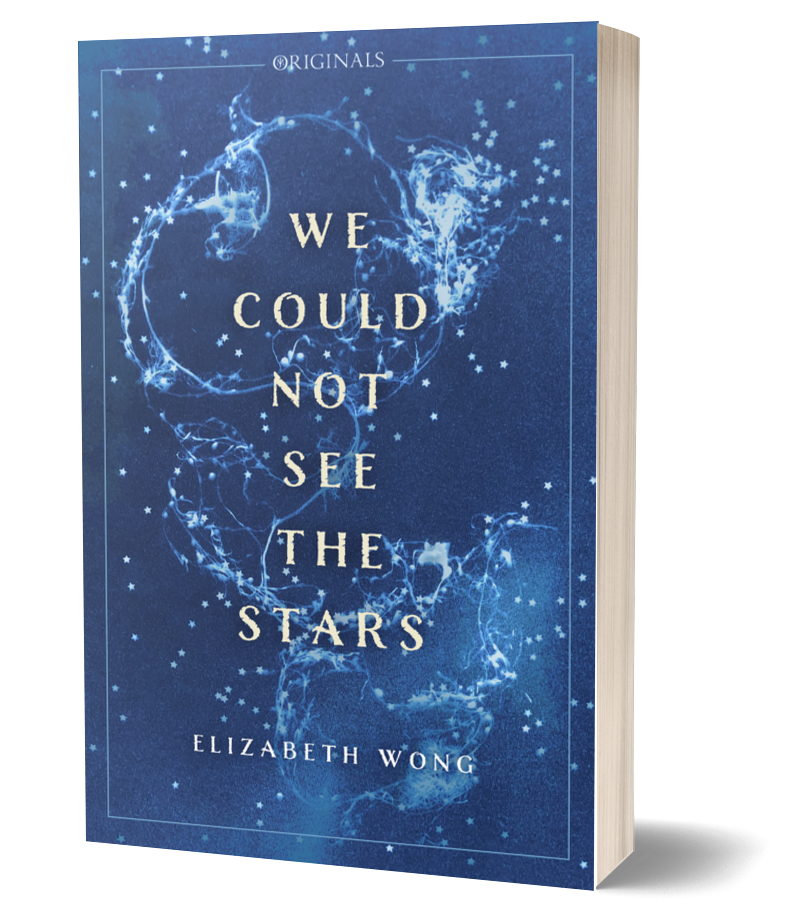
Set in an alternate Malaysia, We Could Not See The Stars follows Han leaving his village, across the Peninsula, to find the truth of where his mother came from — into the forest of Suriyang, so cursed that those who enter return without their memories. A literary speculative novel for readers of Piranesi, The Memory Police and Ocean Vuong.
‘No people, only ghosts here,’ he whispered.
Han has lived his whole life in a sleepy fishing village on the Peninsula, raised by a mother who arrived from across the seas, carrying no memories and a mysterious spade. Now she is gone, and the questions that she has left behind are the only inheritance he has.
When a stranger comes asking about his mother, Han sets off to cross the Peninsula and the seas. His destination: the forest of Suriyang, so cursed that those who enter will return without their memories. Somewhere in the forest is rumoured to be an ancient civilisation, and a mysterious golden tower — and perhaps the truth of where Han’s mother came from.
For readers of Piranesi, The Memory Police, and Ocean Vuong — a luminous and devastating novel of memory, loss, and the stories we carry, written with the lyrical precision that announces Elizabeth Wong as a singular new voice in literary speculative fiction.
First published in the UK by John Murray Press (a Hachette UK company). Longlisted for the Bath Novel Award and the Lucy Cavendish Prize.
Praise for We Could Not See The Stars
Fantastical elements and dreamlike sequences that elevate it above the ordinary… A tale of loss, memory, and remembering, this literary speculative fiction surprised me at every turn. — Elaine Lau, Lit Books
I get this feeling like I have a tenuous grasp of something profound as I was reading this book, like I am on the verge of a revelation. And then that feeling is gone, like wisps of a dream. — A Naga of the Nusantara
Elizabeth Wong’s debut novel is a beautiful and heartbreaking read. — Jasmine, Goodreads
     Han was contemplative. Nothing that he had seen so far answered his questions about where his mama and he came from, who they were. He was sad for his mama, and for himself, for not only did he not know her, he didn’t even know the person who had become her. And then, what of the people that led to him? His mama’s father, his mama’s mother, his mama’s father’s father, his mama’s father’s mother – the list went on and on, the people he did not know, the stories they had not told him, the names that they had lost.
     ‘No people, only ghosts here,’ he whispered.
— Excerpt from We Could Not See The Stars
Reviews, Interviews and Related Articles
- (MAJOR SPOILERS IN LINK) Panel discusses We Could Not See The Stars, Thinking Space: “Fiction as a source of inspiration and knowledge for geographers”, hosted by the School of Geosciences, the University of Sydney (August 2022)
- Review by Fong Min Hun of Lit Books (July 2022)
- Review by Yen Ooi of Hong Kong Review of Books (November 2021)
- Review by Yang Ming of Ink Pantry (August 2021)
- Review by A Naga of Nusantara, a Malaysian reviewer, whose review explores the novel’s cultural contexts (August 2021)
- Revisiting my research trip to Pantai Remis, a fishing village in Malaysia, where my mother was my chaperone, translator and interviewer. As told to Movable Worlds (August 2021)
- Author interview by the Bath Novel Award. An earlier draft of We Could Not See The Stars was longlisted for this award in 2018 (June 2021)

We Could Not See The Stars is now available to buy from:
If you are not ready to get a copy, add to Goodreads.
Or subscribe to my newsletter to get notified of release updates.